skip to main | skip to sidebar

The Adventure Travel

Monday, June 18, 2007

pray for the bedouin

For the next couple of weeks, my family and four others from our church will be traveling to the Middle East for a short term mission trip. We will be hooking up with some of our very good missionary friends there who have focused their life passion on the Bedouin people of North Africa and Middle East.

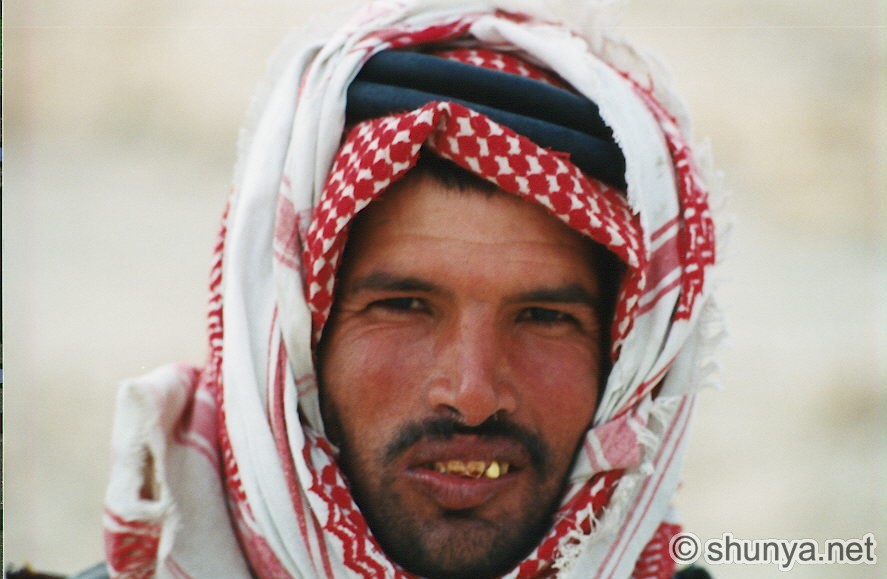
The Bedouin are desert dwelling Arabic speaking pastoral nomads. They live in tents made of goat hair and live off the land in much the same way as nomadic tribes have lived for thousands of years. The Bedouin are known for their ability to survive the most harsh conditions of the African and near Eastern deserts. In the drier regions, they herd camels, while in the more vegetative areas they tend goats and sheep. From a distance they seem backward and unsophisticated, but they are the only people in the world who know the deserts secrets- how to survive the intense heat and find the water and sustenance to raise animals and to thrive in conditions most people would never survive. Some groups of Bedouin will travel up to 600 miles by foot in a year just to find water sources.

Traditional Bedouin society is organized by a series of overlapping kin groups, making it very difficult to break through with the gospel. The Bedouin people are nearly 100% Muslim, although there is at least one known tribe in the Middle East that is Christian.

In Bedouin culture, the women do a tremendous amount of work in tending animals and raising children, weaving tents and nurturing the elderly. The men manage the farms and socialize with other men and make plans. Bedouin children stay on the woman's side of the tent until about age 7. Older children often tend to the animals and help in the welcoming of guests. It is not unusual for a Bedouin man to have several wives with several children from each one. The typical Bedouin tent is bursting with the lively sounds and activity of lots of children. At the first signs of a visitor, the small children will run quickly to their mother's side of the tent.

Hospitality is a very important feature of this ancient Middle Eastern society. You can not approach a Bedouin tent without quickly being invited to participate in the family meal and drink tea and coffee. In this culture, it is to your great honor to welcome guests. We all have a thing or two to learn from these marvelous people about the importance of hospitality and community.

We will be hiking about 10 miles a day as we seek out new Bedouin friends. Please pray that we will make lots of great connections into a variety of tribes, and that our missionaries there in this part of the world will deepen their influence and relationships among this mostly unreached people group.


As I will not be near a computer or any other communication device for the next 2 1/2 weeks, this will be my last blog for awhile. I am temporarily shutting down the comment section in order to keep spammers and slammers away.

Wednesday, June 13, 2007

sbc convention 2007

Teri and I just arrived back home after a long day of traveling back from the convention in San Antonio. It is always good to gather with fellow Baptists in such large numbers at these annual events. The sheer numbers of messengers and the number of states represented is in and of itself an inspiration.

Briefly, here are my observations:

1. Kudos to Frank Page for conducting business with grace, wit and even-handedness. I counted at least three occasions that the convention spontaneously applauded the chair for his fairness at the end of a business session. I have been to many conventions in which the chair ruled with an iron fist. Frank moderated with open arms. Great job!

2. I was disappointed that David Rogers was not elected as First Vice President. The other guy had home field advantage.

3. I was glad to see the Executive Committee report on the Baptist Faith and Message adopted with a clear majority. The convention has now spoken with clarity that our agencies should not overstep their bounds when it comes to doctrinal matters. We are a confessional people who do not appreciate our agencies meddling with the autonomy of the local church (at least that's how I interpret it). It was a nice moment when Dwight McKissic stood in favor of the motion and gave his "In the Mckissic home, the children do not tell Daddy Mckissic how to run the house!" speech. Anyone who knows his background understood the profundity of that passionate speech.

Updated: I have read many of the reports and blogs since the convention that in affect argue that this decision of the convention should be ignored because after all "messengers didn't know what they were voting on." I find this line of arguing INCREDIBLE and disgusting for at least two reasons.

One, if one argues that the messengers of the convention are nothing but stupid, uniformed sheep who can't think for themselves, then he must consider that we have problems that go way beyond this mere motion from the floor. I know of at least one person who is claiming that if some (I am assuming he is talking about himself) would have only had the opportunity to speak against, the thing would have been defeated. My personal opinion is that it would not have mattered one wit how long the point was argued, the logical good sense of the wording of the report would have carried the day. Our BFM is a sufficient document for cooperation in our convention. Period. If in fact the convention is made up of weak minded robots as some are suggesting, we have problems that must be fixed at the very core of who we are as a people.

Two, what will be the state of the convention if it's stated and clearly articulated will is completely ignored and even scorned by her entities? The ramifications of this kind of arguing are way beyond the immediate affects of this one motion. If some of our leaders do not step up and soundly refute this kind of thinking, our convention may soon become a den of thieves.

4. I am seeing more youth and more color at our conventions- I like that!

5. I had a conversation with Carla Hinton, the religion editor of the Daily Oklahoman as I was preparing to board the plane on the way home. She asked me my overall impression. I told her overall I felt like we had a very good convention. I did not sense anger or hostility or division (Although Paige Patterson came pretty darn close in his Seminary rant!). There was honest debate, brotherly disagreement, but all in all I was very pleased that our convention seems to enjoy the vibrant healthy glow of a bright future. The IMB report is always the highlight for me. It is our missions initiatives as Southern Baptists that are so mind blowing! This year we had a record offering to missions! To those who say denominationalism is dead, we only have to point to conventions like these to see that there's still a lot of beats left in the SBC heart!

Thursday, June 7, 2007

why i will vote for david rogers

Next week when the Southern Baptist Convention convenes in San Antonio, I will cast my vote for David Rogers for First Vice President.

I do not know David personally, although he and I have emailed each other occasionally. There are many reasons why I believe David, the son of the late Adrian Rogers and missionary to Spain, is the right choice for our convention. But perhaps the best reason I can think of is because he is a man who can write blog articles like this.

Monday, June 4, 2007

the church of golden arches

There has been a lot of print lately about the state of the Western church. The enthusiasm of the 80s and 90s over church renewal and change have given way to new realities. The most disturbing reality is that people are leaving the church in massive numbers.

The UK's "Christianity" magazine explores the reason for the mass exodus. Studies have shown that people have not given up their Christian identity as such, they have just given up on going to church. In England alone, over a million people left the church the 1990s. George Barna and others have written about the same phenomenon here in the States. Increasingly, people are putting less of an emphasis on church attendance- they just don't see it as a necessary component of faith.

Anyone who has heard me teach for more than ten minutes knows about my passion for Christian community. The Bible simply does not envision Christian experience without meaningful relationships that challenge and grow us and keep us accountable. The Bible assumes that if you are a Christian, that you are a part of a local body of believers. Jesus spent His time before and after the resurrection building community.

Anyway... I digress- back to Christianity Magazine and their observation that one of the main issues at work among evangelicals is the "McDonalidization" of the church:

It was the American sociologist George Ritzer who first made the comparison between modern western society and a McDonald’s restaurant. His work, which examines how the McDonald’s traits of efficiency, calculability, predictability and control affect the way society functions, has received widespread recognition. More recently, the label ‘McDonaldized’ has also been applied to the church (see John Drane, The McDonaldization of the Church).

The key principle of ‘McDonaldization’ is the achievement of the optimum means to a given end. The church has an ‘end’ of converting people to Christianity, but in seeking to do so effectively we can all too easily adopt a one-size-fits-all formula. As Eddie Gibbs, professor of church growth at Fuller Seminary observes, we give a “one shot, close the deal, presentation”. Esther’s recollection of her conversion experience troubled me: “There was nothing that made me feel awkward,” she said, “and I kind of identified with what the speaker had to say…so I thought ‘why not?’” Is it really surprising that before too long, Esther found herself slipping out through her church’s back door, just as easily as she had walked in the front?

So how is it that pre-packaged, no commitment gospel messages have come to represent the accepted norm in so many of our churches? Part of the reason could be the emphasis given to ‘mass-evangelism’ over the last 50 years.


Billy Graham, for example – the most successful mass-evangelist in history – always stressed the need for each individual to be ‘born again’, as a oneoff event. Not wanting to discredit Dr. Graham’s ministry in any way, the effect has been that most evangelicals now tend to see the ‘Damascus Road experience’ as a benchmark for how conversion always happens. Consequently, Christians who have not had a dramatic experience but have simply started a gradual journey of faith can feel somewhat excluded. “I’ve never had a sudden conversion experience” explained Wayne, “and it’s always bothered me because everyone’s had one and I haven’t”. This sense of not fitting into the accepted mould certainly contributed to Wayne’s initial disillusionment, which eventually led him to ‘jump ship’.


We can so often give the impression that a heart-felt ‘sinner’s prayer’ is all that is required for a life-long commitment to Christ. This message naturally leads to the belief that church-going is not necessary for the Christian; hence ‘a churchless faith’. But like the seeds in Jesus’ parable which fell on the shallow soil, ‘in the time of testing they fall away’ (Luke 8:13).

The overemphasis on an individual, one-off, salvation experience can easily undermine the fact that we are the Church, and that it is through the Church that God will bring about his plans for the world. If the word ‘Christian’ is merely a label, acquired cheaply from an evangelical vending machine, then people will feel free to leave their churches and still call themselves ‘Christians’, in much the same way that after a cookery class one will still continue cooking, at home!

These are interesting observations for us to think about. I have written extensively on this blog about the dangers of consumerism in the church, so I won't go into it again.

But as I see it, the problem is not just that we have given in to pragmatism in the same way that McDonald's seeks out customers, the problem is that we have adopted so much of the cultural text that there is very little distinction between sacred and secular. I fear that in our attempt to be attractive to the unredeemed, we have lost the "peculiarity" that gives us our moral voice to speak into the need for redemption.

We may not yet know the definitive answer as to why so many in our younger generation are bailing on the church, but could it be that by adopting cultural texts instead of sticking to our own, we have lost our uniqueness? Perhaps in our attempt to give people what we think they want, we have distorted the very thing they need the most?

To paraphrase Jesus' admonishment to the Church, perhaps the salt has lost it's "saltiness".

Evangelical theologian Kevin Vanhoozer has recently made this observation:

Contemporary culture is actually made up of a vast array of "texts" – that is, humanly produced works that have meaning and significance. The implicit message of cultural texts is "This is what it means or looks like to be human"; "This is what the good life looks like". In other words, culture programs our imaginations to think in certain ways just as it programs us to live in certain ways. Think of culture as the software that runs the social hardware – the various institutions (e.g., schools, government, family) that comprise our life together.

On this model, I think we can safely say that the main programming in contemporary culture is not particularly Christian. The values that drive our culture are not distinctly Christian; indeed, many are inimical to Christian values. For example, George Ritzer speaks in his book The McDonaldization of Society of the way in which fast food values – efficiency, calculability, predictability, and control through technology – have taken hold of many other institutions, including, to some extent, the church! Similarly, James Twitchell speaks of the "branding" of America: everything, even Jesus, is fair game for marketing. But should the gospel be "marketed"?


I think that the last forty years have taught us that the answer to that question is a resounding "no". At least, not in the same way that one markets MacDonalds.

Wednesday, May 23, 2007

the changing face of the church

Yesterday in our staff meeting our High School Pastor (and recent seminary graduate!) Michael Butler, passed along an observation he had recently heard at a conference that the demographics of Christianity world wide has changed from white to non-white.

Just 50 years ago this was reversed, as over 60% of the Christian world population was western and Anglo. I have heard this for the past several years and the data I have seen from missiologists has continually affirmed the fact that the world's church growth movements are no longer western in nature, but instead tend to be Asian, African or South American. There are now more Christians in Africa than in North America. The Asian church dwarfs the American church.

Contrary to what many believe, we in America are not the center of the Christian universe.


Michael made the observation that we tend to think of the emergent church as 20 something white guys with goatees lighting candles, but in truth, the emergent church is more likely represented by a group of believers meeting in a house in China or South America.

Consider this from the UK magazine, Christianity:

For over 200 years the missionary movement has seen a stream of people sent from the UK, and later the US, to Africa, Asia and Latin America. Today the notion of the gospel ‘from the west to the rest’, has disappeared. The growth of the church in parts of world, and shrinkage of the church in parts of the ‘west’ has meant that there are more non-western Christians in the world.

The statistics are overwhelming. Missions statistician, David Barrett, records that in the 20th century, the Christian population in Africa exploded from an estimated eight or nine million in 1900 (8 to 9%) to some 335 million in 2000 (45%). In Asia the proportion of Christians grew from 2.3% in 1900, to 8.3% in 2000. The Atlas of World Christianity estimates that the number of Pentecostal Christians across South America grew 500% between 1960 and 1980.

The evangelical church in Argentina grew from 1m in 1980 to 3m in just 20 years, in Venezuela from 1 – 2.5m between 1990-2000. In Bogota, Columbia, Cesar Castellanos at MCI church has witnessed incredible church growth from 70 small groups to 20,000 cells in only eight years.

In Asia, the growth of the church in South Korea, China and Indonesia, means there are now more evangelical Christians in Asia than in North America. Singapore's churches are now the most evangelistically active in the world, with one missionary sent out per 1,000 Christians. In the Philippines 7% of the eight million overseas contract workers are evangelicals.

The tentmaker movement of the Philippine church plans to recruit 200,000 BY 2010 to engage in mission. Already many serving as nannies and chambermaids have seen churches planted some in countries where Christianity is not welcomed.

As further evidence of how the non-western church is now the biggest player in world missions, click and view this amazing video about the Chinese church.

Of course, this is very exciting stuff. But beyond the obvious reasons for rejoicing at these statistics, I see this as a natural outpouring of the work of the Holy Spirit for the following reasons:

1. This church movement is more related to the early church in that it is not affected by the western church's enlightenment individualistic worldview. Therefore, this church will be somewhat unencumbered by our existential humanistic tendencies.

2. This church seems to be more organic and grass roots and therefore shows signs of more dynamic multiplication.

3. Because the two thirds world church growth movement is primarily a house church movement, there is more focus on intense study and community life based around the teaching of scripture.

4. The small group nature of the church provides more opportunity for genuine biblical community. The irony of Christian history is that the more persecuted the church, the more "underground" it has been, the more dynamic it's growth.


5. The western church will get better. Perhaps there will come a day when the western church will look across the oceans to the south and see that we have as much to "unlearn" as we have to "learn".

Wednesday, May 16, 2007

pure joy

Consider it pure joy, my brothers, whenever you face trials of many kinds, because you know that the testing of your faith develops perseverance. Perseverance must finish its work so that you may be mature and complete, not lacking anything. (James 1:2-4)

Recently I accepted an invitation to speak at a pastor's conference in Northern India. One of the topics they have asked me to address is the issue of how Christians should contend with suffering in this life.

As excited as I am in being asked to speak at this conference, I have more than a little trepidation about speaking to a group of Christians living in a Muslim and Hindu dominated culture about suffering. I think my Christian brother's and sister's living in that society could give ME some insight into that subject. I tend to agree with what Joni Erickson Tada wrote about a trip she made to Africa:

Here in the sub-Sahara, it seemed that the weaker people were, the harder they had to lean on God - the harder they leaned on him, the greater their joy. It was so different in America, I thought. In the West, we think God exists to make our lives happy, more meaningful and trouble-free. Suffering is a hateful word, and we do anything to eradicate it, medicate it, circumvent it, or divorce it, building hospitals and institutions to alleviate suffering. But in Ghana, people seemed more ready to come to God in empty-handed spiritual poverty, taking from his hand whatever he might offer.

A couple of weeks ago I addressed our graduating seniors with a challenge from the book of Hebrews that focused mainly on the subject of pain and suffering they would have to overcome in this life. From the text, I pointed them to the suffering of Jesus and how from His wounds we find perhaps the clearest answer to the question of suffering. The fact that Jesus carries His wounds into the next life seems to be saying to us that our pain and scars in this life only make the next life more meaningful, more joyful and makes the next life more complete.

I got an email later in the week from someone who wondered why I couldn't be "more encouraging" to our graduates.

I rest my case.

In this weeks Bible study from Hebrews 12 I will point out that suffering in this life exposes the inadequacies of our life perspectives. If your purpose for life is the same as most in our culture, to seek existential happiness and comfort and to never experience pain, then when the inevital pain comes into your life, it will destroy you because it will destroy your purpose.

George MacDonald once wrote,

“Everything difficult points to something more than our theory of life yet embraces.”

There is great tension in scripture regarding our suffering. On the one hand, this world is broken and sinful and that is not what God intended. On the other, because of His providence all of the suffering we experience in this life is used by God to change and shape us for His glory. The external brokenness of this world is used by Him to change our inner brokenness.

This is why we are not to despise suffering. This is why we are to count it all joy when we face trials of many kinds.

Wednesday, May 9, 2007

reflections on the kansas city imb meeting

I am a little late on my post this week due to my trip to the IMB meeting in Kansas City. I want to give you my impressions. I know that there will be a great deal of discussion regarding the latest actions of our board regarding a change in the wording of the controversial policies passed in November 2005. You can read the new wording and the rationale here.

Positives:

1. The Spirit of the board continues to be very good. Even those of us who have been in the minority on these highly volatile policy issues are treated with great respect and kindness. The meetings have been a model of how Baptists can disagree and continue to walk together as brothers.

2. The missionaries. I am continually amazed at the quality of the missionaries we are sending on the field. This trip I had the privilege of approving some new missionary candidates who are related to one of our church members! They have a very exciting assignment in a remote part of the world in a place where the gospel has not yet penetrated. How exciting it was to get to know them and to tell them how our church would continue to hold them up in prayer. Our team heard some incredible stories of how the gospel is reaching the nations in unprecedented ways. I am in awe of how God is using these incredible men and women around the world.

3. I am very pleased that the "policies" have been downgraded to "guidelines". A guideline denotes more flexibility and wiggle room. Of course, I would rather we not have what I consider to be a non- biblical guideline in place, but at least we are not in the untenable position of having it as dogma.

3. The rewording of the baptism guideline does two things that I consider steps in the right direction. One, it states that a person should be baptized "under the authority" of their local church, as opposed to being baptized "in" a local church. The implication of the old policy was that a person should be baptized in a church building in order for that baptism to be valid. Though the guideline is still somewhat landmarkist in my opinion, it has improved with that clarification.

4. An amendment was made to the baptism guideline stating that the candidate who fails to meet the requirements of the guildeline is to go back to the local church and ask that body to help rectify it. The board made this change in recognition of the complaint that this policy was an assault on the autonomy of the local church. It is good of the board to be sensitive to this complaint.

5. There seems to be a growing number of trustees who have recognized the potential damage that has been done as a result of the policies. These changes are a step in the right direction. I hear regularly from missionaries, staff and IMB leadership of how what they believe to be narrow policies have affected everything from recruitment to morale. The board must respond to this in tangible ways. I believe we are beginning to do that.

What I Wish was Different:

I realize I am walking a fine line here in attempting to not violate trustee policy regarding criticism of board policy decisions. The following observations are not about policy decisons per se, but rather unresolved issues that I am hopeful will change.

1. It is incomprehensible to me that Wade Burleson is not allowed to serve on committees. I know that he is controversial, opinionated and confrontive, but since when have we as Southern Baptists disqualified people for those reasons? The SBC would not exist if this had been our history. You may not like him, but the guy does his homework, has passion for the work of the board and many many Southern Baptist's agree with his sentiments. The continued sequestering of Burleson only makes us look bad. What it says to Southern Baptists is that if we don't like the opinions of a particular trustee, we just won't let him serve. It says that we value conformity over diversity. It says that we don't have the maturity to accept differing opinions. It says that we don't like people who broadcast their views in public to serve on the board. It says that we don't value openness. For all the seemingly good reasons to continue to punish Burleson (and there may be some who believe they have very good reasons), they are greatly outweighed by the negatives.

2. It is my understanding that our regional leadership of the IMB, those who are leaders of the different regions across the world, were prepared to give a report to the board of their perspective on the affects of the new policies to missionaries on the field and candidates coming into their regions. The chairman would not allow that report. If this is true, it is difficult for me to understand why we as a board are not allowed this critical information. It is not that we don't have the time or don't have the interest. I have heard various rumors regarding the severe loss of missionary candidates as a result of the new policies, I would like to have objective information and numbers. Our decisions are not complete without it. It only makes people suspicious when information is suppressed or at least seemingly suppressed. We are all big men and women on the board who are fully capable of comprehending whatever report our staff and regional leadership wants to give us. In fact, we have a mandate from our convention as trustees to make good decisions with good information. The chairman may have a good reason for not allowing it or ruling it out of order, I am only saying that it gives the appearance of suppression of information and that is not a good impression. Despite what some may think, perception of the truth matters as much or even more than the truth itself.

Bottom Line: It was a Great Meeting

Despite these two things that I would have changed, it really was a very good meeting. I applaud chairman Floyd's good spirit and the way he conducts our meetings. They are always filled with prayer and praise and a loving spirit. His good leadership has brought our board together and I believe great progress is being made. Our Lottie Moon Mission offering last year was the biggest ever! There are many reasons for us to be exceedingly optimistic about the future of world missions and for us to be excited about the work of Southern Baptists around the world. The SBC is one of the only denominational entities left that is doing evangelical missions around the world. And we are doing it better than anyone else.

If you are one of those missionary candidates who is considering leaving the SBC for another mission organization, I would say that despite our seeming dysfunction, God is continuing to bless in amazing ways. I will tell you what my dad used to tell his congregation while I was growing up, "If you ever find the perfect church, don't join it- because the minute you join it, it won't be perfect anymore!"

God continues to use broken vessels. He continues to get the glory in spite of our occasional missteps. His work in the IMB continues in a great way.
Newer Posts Older Posts Home
Subscribe to: Posts (Atom)

Total Pageviews

Popular Posts

  • what meekness isn't
    He has showed you, O man, what is good. And what does the LORD require of you? To act justly and to love mercy and to walk humbly with your ...
  • preaching to myself
    One of my pet peeves about myself is that I tend to get preachy. It is, as you would guess, a hazard of my trade- since I am in fact a prea...
  • stetzer
    The first time I met Ed Stetzer was at a conference in Seattle Washington where he was speaking at Mars Hill Community Church. I had heard...
  • The Breath of God
    Last Sunday in both of our worship services archaeologist Scott Carroll gave us a glimpse of some of  the most significant artifacts found w...
  • to clarify
    I have recieved many emails over the past few days from people who are concerned that I will no longer speak my mind regarding the work of t...
  • pure joy
    Consider it pure joy, my brothers, whenever you face trials of many kinds, because you know that the testing of your faith develops persever...
  • The Learning Community
    This past Monday I spent the day interviewing various church members about the lessons God has taught them through the years on various subj...
  • self inflicted wounds
    A good friend came to community group Sunday night with a black eye (I wouldn't want to embarrass him by giving his true identity but if...
  • why i can't be good for goodness sake
    A couple of weeks ago the "American Humanist Association" started a 40,000 dollar ad campaign in Washington D.C. promoting their c...
  • day twenty three: making up is hard to do
    Jayme Thompson “I’m sorry” are two of the most important words we ever say. They preserve one of the most important things we have – our rel...

Followers

Blog Archive

  • ▼  2013 (20)
    • ▼  February (11)
      • travel to argentina 01
      • adventure travel
      • adventure travel companies 05
      • adventure travel companies 04
      • adventure travel companies 03
      • adventure travel companies 02
      • adventure travel companies 01
      • Animal volunteer programs in Ecuador
      • Top 5 tourist information tell Grand Canyon
      • Colombia - Travel to Tayrona National Park
      • Unless the Lord Builds the House
    • ►  January (9)
  • ►  2012 (59)
    • ►  December (4)
    • ►  September (3)
    • ►  August (4)
    • ►  July (8)
    • ►  June (7)
    • ►  May (3)
    • ►  April (7)
    • ►  March (10)
    • ►  February (8)
    • ►  January (5)
  • ►  2011 (64)
    • ►  December (5)
    • ►  November (6)
    • ►  October (8)
    • ►  September (10)
    • ►  August (17)
    • ►  July (3)
    • ►  June (2)
    • ►  May (3)
    • ►  April (1)
    • ►  March (5)
    • ►  February (3)
    • ►  January (1)
  • ►  2010 (38)
    • ►  December (1)
    • ►  November (2)
    • ►  October (1)
    • ►  September (1)
    • ►  August (1)
    • ►  July (1)
    • ►  June (2)
    • ►  May (2)
    • ►  April (3)
    • ►  March (3)
    • ►  February (7)
    • ►  January (14)
  • ►  2009 (26)
    • ►  December (5)
    • ►  November (3)
    • ►  October (3)
    • ►  September (1)
    • ►  August (2)
    • ►  July (4)
    • ►  June (2)
    • ►  May (2)
    • ►  March (3)
    • ►  January (1)
  • ►  2008 (42)
    • ►  December (1)
    • ►  November (3)
    • ►  October (3)
    • ►  September (1)
    • ►  August (3)
    • ►  July (4)
    • ►  June (4)
    • ►  May (3)
    • ►  April (2)
    • ►  March (6)
    • ►  February (7)
    • ►  January (5)
  • ►  2007 (88)
    • ►  December (4)
    • ►  November (5)
    • ►  October (6)
    • ►  September (1)
    • ►  August (3)
    • ►  July (3)
    • ►  June (4)
    • ►  May (3)
    • ►  April (10)
    • ►  March (27)
    • ►  February (11)
    • ►  January (11)
  • ►  2006 (65)
    • ►  December (6)
    • ►  November (3)
    • ►  October (2)
    • ►  September (5)
    • ►  August (5)
    • ►  July (4)
    • ►  June (5)
    • ►  May (9)
    • ►  April (5)
    • ►  March (7)
    • ►  February (4)
    • ►  January (10)
  • ►  2005 (6)
    • ►  December (6)

About Me

Unknown
View my complete profile
Powered by Blogger.
 
My Ping in TotalPing.com